Le mani di un artigiano tirano il filo cerato attraverso una cucitura a sella su un cuoio bruno; accanto, la lesina appoggiata sul ceppo di legno.

Territories

Firenze

The gold of the Ponte Vecchio, the leather of Santa Croce, the thousand workshops of a world-city.

The place

The territory

Firenze is a system. A provincial capital that spreads over almost three and a half thousand square kilometres, from the Mugello to the Chianti, from Empoli to the hills of Fiesole. A geography that brings together river valleys, Apennine ridges, vineyards and metalworking plains.

Underneath it all, the Arno. The river that shaped not only the landscape but the way of working: from the medieval fulling mills to the first tanneries, from the machine shops of Pontassieve to the restoration workshops that today keep alive works from half the world. Water here is productive infrastructure — ancient and contemporary at once.

Firenze learned early how to do two things at the same time: to design and to produce. The medieval guilds did not separate the idea from the hand, and that model has come down to us in a thousand forms. The goldsmiths' workshops on the Ponte Vecchio have been working without interruption since 1593. The Scuola del Cuoio, founded in 1950 in the cloister of the Basilica of Santa Croce, continues to train new masters. The Opificio delle Pietre Dure, established by the Medici in the sixteenth century, is still one of the most important restoration centres in the world.

But it would be a mistake to think of Firenze as a museum of making. The Florentine leathercraft district is one of the most dynamic production hubs in Europe: international luxury brands have their complete supply chain here, from pattern makers to final assembly. Empoli remains one of the Italian centres of blown glass. Montelupo Fiorentino continues to be the capital of decorated ceramics. Firenzuola works pietra serena as it did in Brunelleschi's day.

Every province has its sentence. The one for Firenze is simple: here, work has never stopped.
The know-how

The crafts of the territory

The crafts of Firenze are too many to list and too specific to summarise. But some say more than others.

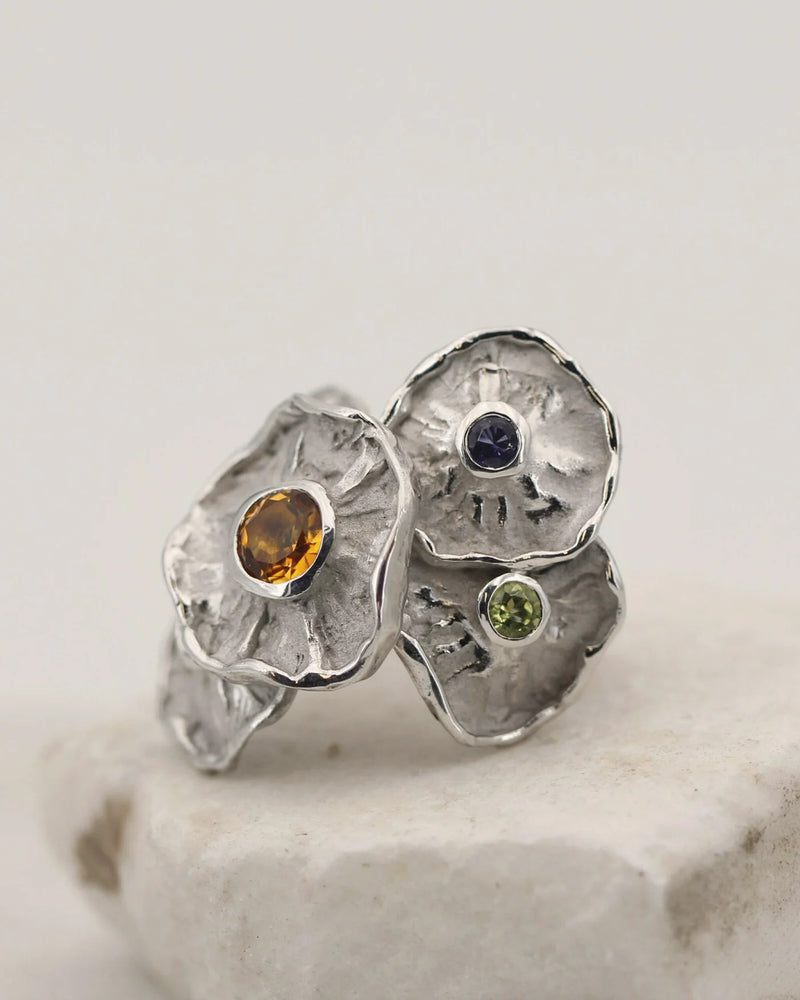
Goldsmithing. On the Ponte Vecchio, behind the windows, there are still those who beat metal by hand, who set stones with nineteenth-century tools, who chase according to the techniques of the grand-ducal schools. Florentine filigree, à jour setting, champlevé enamel: every gesture has a name, every name has a school, every school has kept its own secrets.

Leather. Tuscan tanning has its industrial heart just beyond the boundary, at Santa Croce sull'Arno in the province of Pisa. But it is inside the workshops of the Florentine historic centre that leather becomes a wallet, a saddle, a book cover, a belt. The Scuola del Cuoio, founded in 1950 in the cloister of the Basilica of Santa Croce, still teaches hand trimming, gilding on leather and saddle stitching.

Pietre dure. The Florentine commesso — that mosaic of marbles cut so thinly that it looks like painting — is a technique that exists only here. It is worked with leather-corded bow saws, abrasive powders and patience. One composition takes months.

Restoration. Firenze is the city where the world sends its own masterpieces to be brought back to life: paintings, sculptures, manuscripts, textiles, liturgical objects. There are workshops that specialise only in the retouching of gilding, others only in medieval tapestries, others still in the restoration of antique scientific instruments.

Glass. Empoli lived on green glass from the eighteenth century onwards. Oil bottles, Chianti flasks, large pharmacy jars: everything came out of the Empoli furnaces. Today the tradition has grown lighter but has not gone out, and some glassworks continue to produce mouth-blown pieces.

Ceramics. Montelupo Fiorentino has been the capital of decorated maiolica for at least five centuries. The quartered, banded, leaf and key motifs were born here — and here they continue to be painted freehand.

Pietra serena. Firenzuola, in the upper Santerno valley, works a blue-grey stone that built half the Renaissance. Floors, brackets, capitals, sinks: pietra serena is still quarried and shaped with chisels, mallets and bow saws.

The table

Food and wine production

When you talk about Firenze at the table, the first word is rich. Not in the sense of abundant — in the sense of layered. A thousand years of history have deposited here a cuisine that mixes Medici refinement and peasant tradition without ever letting the two quarrel.

Meat. The Chianina breed, raised between the Val di Chiana and the Mugello, gives the true bistecca fiorentina: three fingers thick, with precise marbling. But there is also the peposo of Impruneta, the lampredotto of the street carts, trippa alla fiorentina, the traditional bollito misto. The cinta senese, a pig with a white belt across its skin, provides cured meats that travel from the Mugello out into the world.

Olive oil. The Florentine Chianti, the hills of Bagno a Ripoli, the slopes of Fiesole: areas that produce a DOP extra virgin olive oil which is a raw material of the dish. Deep green, faintly bitter, slightly peppery at the back of the throat.

Wine. Chianti DOCG, Chianti Classico, Chianti Rufina: a cluster of denominations that since the fourteenth century has told the same story with different accents. Sangiovese on its own or in a blend, vinification in concrete or in barriques, historic cellars or new labels: the wine geography of Firenze is a book that is still being written.

The Mugello. The mountain area brings its own products: Marrone del Mugello IGP chestnuts, pecorino del Mugello DOP, the white truffle of the valleys above Borgo San Lorenzo, Prosciutto del Casentino beyond the ridge. Specialities that were never really rural, because Firenze has always put them on its own table.

Sweet things. Cantucci dipped in Vin Santo del Chianti. Schiacciata fiorentina with icing sugar in February. Pan di ramerino, zuccotto fiorentino, brigidini di Lamporecchio.

The markets

Mercato Centrale di San Lorenzo

Built in 1874 by Giuseppe Mengoni, it houses the historic food market on the ground floor and the new food hall on the upper floor. Among the historic stalls: tripe sellers, fishmongers, long-established charcutiers, bakers. Open every day in Piazza del Mercato Centrale.

Mercato di Sant'Ambrogio

The market of the real Florentines. Smaller than the Centrale, more everyday, more purely about food. Local fruit and vegetables under the canopy, fish and meat stalls inside. Open Monday to Saturday morning in Piazza Lorenzo Ghiberti.

Mercato del Porcellino (Mercato Nuovo)

Under the sixteenth-century loggia of the Mercato Nuovo, makers of straw goods, leathercraft and handicrafts have always worked. It is the market where the stalls are fixed, and where the straw bags of Firenze still find their shop window today. Open every day in Piazza del Mercato Nuovo.

Mercato del Mugello — Borgo San Lorenzo

Saturday morning, in Piazza Dante and the streets around it: the weekly market of the Mugello. Producers from the valley, pecorino DOP, seasonal fruit, cured meats from the Casentino, marrone IGP chestnuts in autumn. The meeting point of the Mugello territory.

All the markets of Firenze are on Tuscany Market Hub

Above there are the ones the territory recognises first. There you will find them all: day by day, square by square, with the stalls that work them and the shopping collection point where the market is actually held.