Il Papavero Decorazioni

CeramicsFirenzeEmpoli

Laboratorio artistico di Marcella e Maria Teresa Lorenzi Il Papavero Decorazioni

Mug with drops and small coloured strokes

For twenty years Marcella and Maria Teresa Lorenzi decorated ceramics for the firms of Montelupo: expert hands, invisible names. Then the firm became their own. Today in Empoli they work the clay from beginning to end — wheel, brush, slow kiln — and every piece that leaves il Papavero is one of a kind, signed by the person who really made it.

Workshop in Empoli, Via Giuseppe Verdi 37 · il Papavero first opened in 1994

1994The first opening of Il Papavero
20Years as subcontractors for the Montelupo firms
1100Degrees of the first firing
13Hours of slow kiln, so that nothing is lost

The hands were already there. The name on top was missing

The story of Il Papavero is the story of two decorators who for twenty years made other people's ceramics beautiful — and of what happens when they decide to sign their own.

Empoli lies inside the Montelupo ceramics district, where the craft is in the air before you even learn it. Marcella and Maria Teresa Lorenzi grew up within it: the passion from childhood, their training at the art school in Firenze, then a VAT number and two decades of subcontract work for the firms of the district. Il Papavero was founded in 1994 — and its real story begins when the two partners stop being invisible.

Ceramic mug with a cat drawn in graphite, on a crumpled linen cloth
The cat in graphite. The drawing is done on the biscuit, and on the biscuit there is no going back.

Twenty years on other people's behalf

There is a school that appears on no diploma: twenty years spent decorating ceramics for the firms of Montelupo. Thousands of pieces left their hands with somebody else's mark on them. It is the hardest and most complete apprenticeship the district can offer — you learn speed without losing precision, you learn every style because you execute every style, and above all you learn what you would want to do differently, given the choice.

The pause, and the choice to reopen

At a certain point life called in its debts: the business stopped for family reasons, and for some years the workshop was a closed chapter. The interesting part is what came after — because reopening an artisan firm, knowing exactly how much effort it costs, is a declaration. The two partners reopened together, reinventing the workshop: no longer executing work for third parties, but a mark of their own with a production of their own.

Mug with a hand-drawn dragonfly
The dragonfly in a single stroke: one line only, with no second thoughts.

The clay from beginning to end

Today no white ceramic to be decorated comes into Il Papavero: clay comes in. The pieces are formed on the wheel, from slabs or by coiling; they are decorated; they are left to dry in the air, in a controlled environment, without forcing the timing. Then the first firing at around 1100 degrees, the glazing, the last decorations and the second firing. A large piece asks for at least ten days, and the kiln works slowly — twelve, thirteen hours — because haste, in ceramics, is paid for in cracks.

Painted and glazed red earthenware is the material of the house; the decorations come from the world outside the window and from the world under water. Traditional techniques of the district, adapted to the present.

Nothing is thrown away

In a workshop where every piece is made by hand, the firing is the moment of truth: something, now and then, cracks. At Il Papavero the wounded pieces do not end up in the skip — they are kept and are reborn as a panel, a decorative element, a new creation. It is the same logic that leads the partners to use recycled materials in production: the workshop works like a small ecosystem, where the mistake is a raw material like any other.

Mug painted with purple irises
The irises. Botany is the most requested repertoire, and it is where the hand shows.

One-off pieces, by rule

On the pages of their online shop the same wording keeps recurring: one-off piece. It is the consequence of the method: when every object passes through the same two pairs of hands, from the lump of clay to the glaze, the perfect copy simply does not exist. Anyone who wants more than one can commission them, and the glasses live in families of variants — the same object, in up to five colours — but each example remains the child of its own working day.

From Empoli to Milano, by way of the Fortezza

The studio remains a neighbourhood workshop, but its reach is widening: at the end of 2025 Il Papavero's creations appear in Living, the Corriere della Sera supplement, in its report on Milano Home; in the spring of 2026 come MIDA at the Fortezza da Basso with CNA and the Firenze in Arte show-market in piazza del Carmine; in June the episode of CNA Storie with Radio Lady tells the two partners' story to the whole district. And for the future there is an idea that smells of an open door: craft workshops open to visitors too.

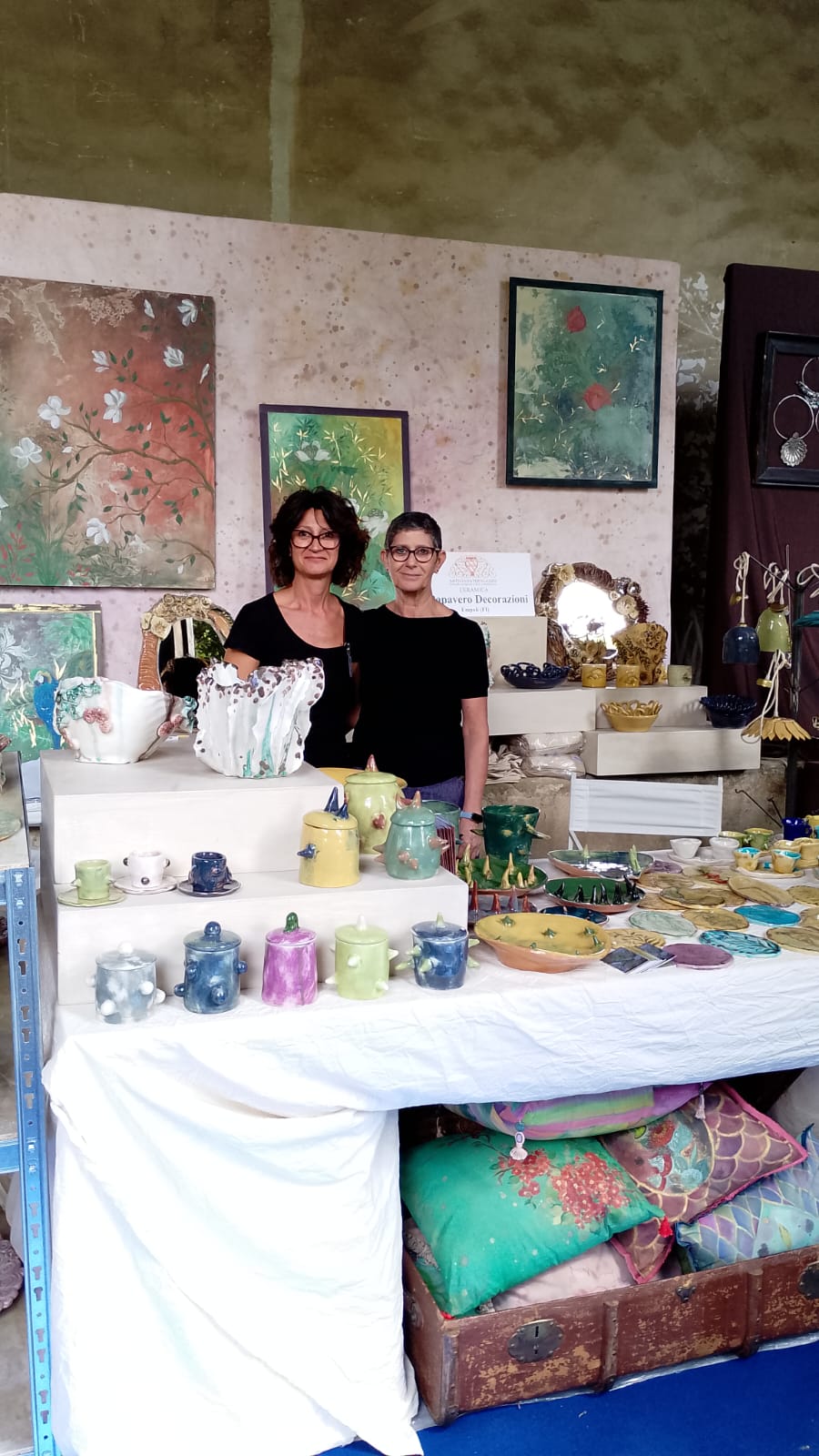
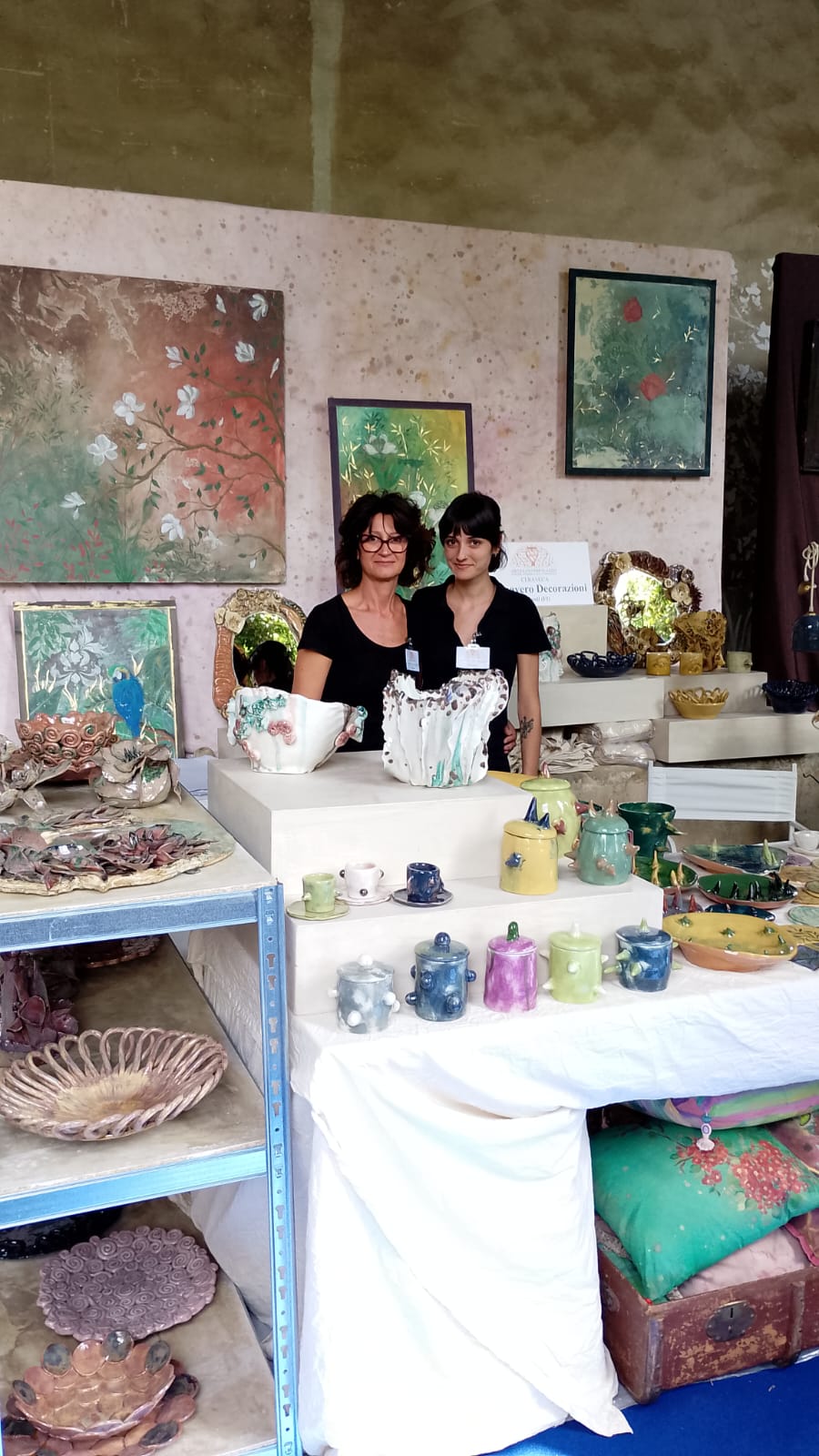
Le due socie del Papavero dietro il banco allestito in fiera, con i pannelli dipinti alle spalle
Il banco del Papavero in fiera, con i barattoli, le ciotole e i piatti a rilievo sugli scaffali
Mug with red berries and a yellow rim
The yellow rim and the earth-coloured handle: the glaze is chosen after the drawing, not before.

The video

What happens in the workshop, on any given day

Four hands, no departments: every piece goes through all the stages within the same walls in via Verdi.

Mug painted with green ferns
The ferns run right around the cup: the decoration has no front.

They shape the clay

Wheel, slab or coil, depending on the piece: the three classic routes of Tuscan ceramics, all three practised under the same roof.

They decorate with a brush

Flowers, nature, sea and seabeds: every decoration is painted by hand on the red earthenware. It is the craft learnt in twenty years in the district, signed at last.

They wait for the right air

The pieces dry in the air in a controlled environment, with no short cuts: hurried drying is the first cause of cracks, and here patience is an ingredient.

They fire twice, slowly

First firing at around 1100 degrees, glazing, decoration and second firing: the kiln works for twelve or thirteen hours. A large piece wants at least ten days of life in the workshop.

They save the wounded pieces

What cracks in the firing is not thrown away: it becomes a panel, a decorative element, a new creation. Recycled materials also enter the production cycle.

They paint beyond the clay

Panels on wood in lime- and marmorino-based acrylics, cushions with hand-painted fabrics: Il Papavero's brush does not stop at ceramics.

The kiln, at the moment it opens

The shop window

Il Papavero's online shop holds more than a hundred creations. These are the worlds they come from.

Mug painted with prickly pear pads and flowers
The prickly pears: the succulents series is the one that sells itself.
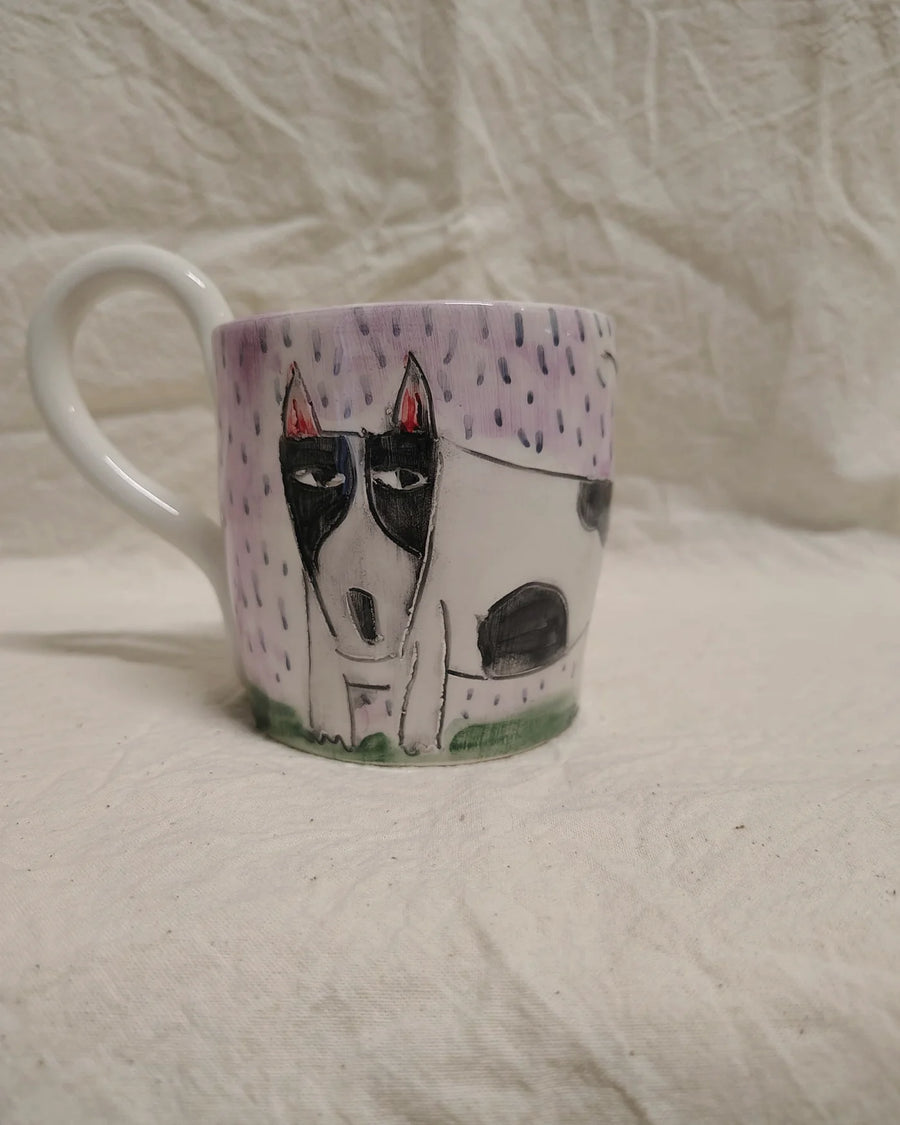
Mug decorated with a dog and rain, on a lilac background
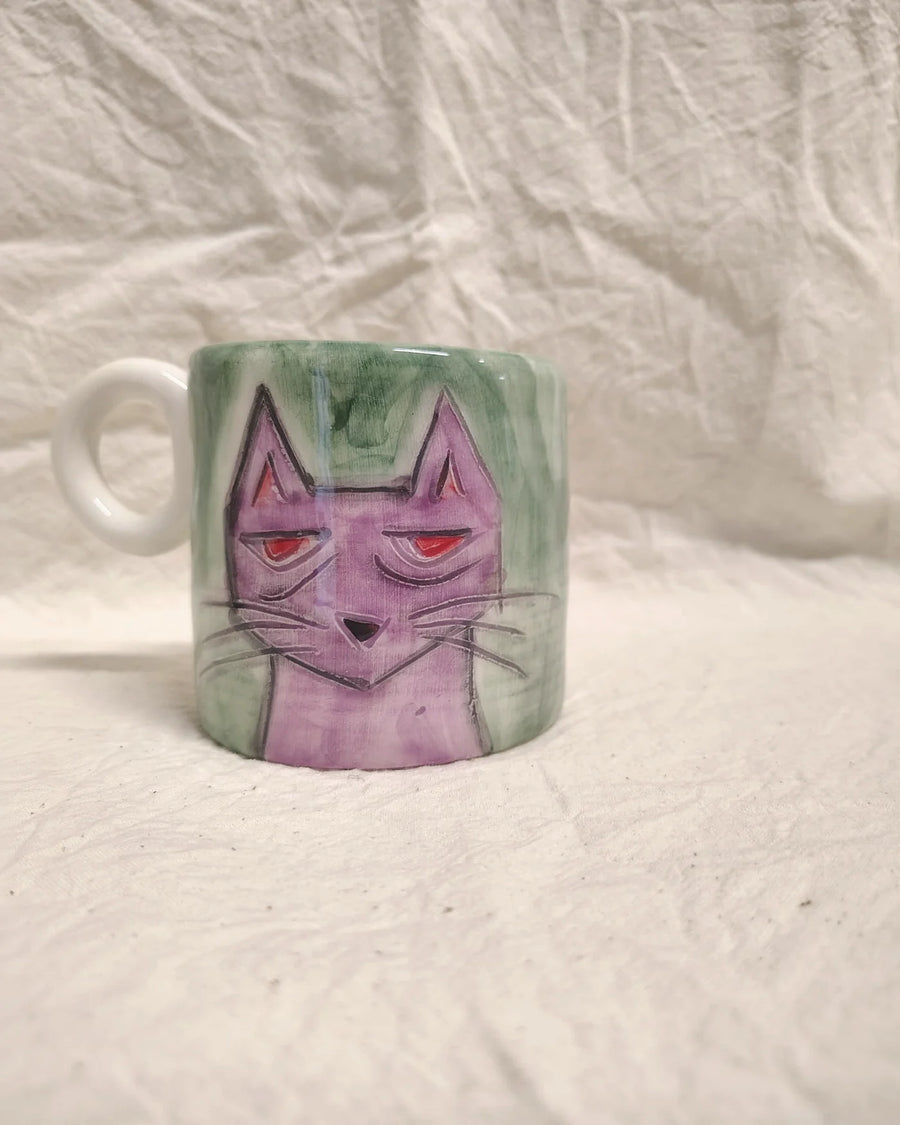
Mug with a pink cat on a green background
Mug painted with purple thistles
The thistles. The two partners divide the figures and the botany between them, and it shows in the catalogue.
Mug painted with flowering cacti
The cactus in flower. Every piece comes out different because the drawing is not a transfer.
Il Papavero Decorazioni

The table

The richest chapter of the workshop: centrepieces, plates, decorative leaves, sauce dishes, jars. Painted and glazed red earthenware, botanical and marine decorations, and the rule of the house printed on every page: one-off piece.

Il Papavero Decorazioni

The vases

From the everyday vase to the important piece: the scale of prices tells the scale of work, from the simple decoration to the large vase that asks for days of brushwork.

Il Papavero Decorazioni

Glasses, bomboniere and small framed pieces

The glasses live in families of up to five colour variants — the same object, a different glaze. The bomboniere — the keepsakes given to guests at Italian celebrations — and the small framed pieces to hang are the chapter of gifts that do not get forgotten in a drawer.

Beyond the clay

Painted panels and cushions

Il Papavero's brush leaves ceramics behind: pictures on wooden panels painted by hand with lime- and marmorino-based acrylics — the palette of green building — and cushions in hand-painted fabric. One-off pieces here too, and they can be made to commission.

The partners

Two names over the same business, from the first opening to the rebirth.

Maria Teresa Lorenzi

Florentine artistic training and twenty years of the district in her hands. She is the voice that tells the process — the modelling, the eleven hundred degrees, the patience — and the inspiration that runs from flowers to the sea floor.

Marcella Lorenzi

The other half of the workshop, same school and same road. Hers is the measure of the right time: at least ten days for a job done as it should be, and not an hour less.

Where Il Papavero is heading

2026

The catalogue on Tuscany Market Hub

One hundred and eighty-eight creations, each with its own page, its own photograph and its own price: the workshop's window, open for buying.

June 2026

CNA Storie tells the story of Il Papavero

The episode devoted to the two partners, with the interview on Radio Lady: the story of the return to the craft told to the whole district.

April 2026

MIDA — Fortezza da Basso, Firenze

Among the businesses in the CNA pavilion at the Mostra Internazionale dell'Artigianato (International Craft Exhibition): the institutional showcase of Tuscan know-how.

28–29 March 2026

Firenze in Arte, piazza del Carmine

Among the sixteen workshops of the Oltrarno show-market: the ceramics of Empoli in the drawing room of Florentine artisans.

December 2025

In Living, the Corriere della Sera supplement

The workshop's creations appear in the report on Milano Home: ceramics, lime and marmorino panels and hand-painted cushions reach the national design press.

2025

Artigianato e Palazzo, in the garden of Villa Corsini

Il Papavero's stall among the makers at the Florentine show, in the garden of Villa Corsini.

1994

The first opening

Il Papavero begins as a craft business working in ceramics, inside the Montelupo district. Then the long season of subcontract work, the pause — and the rebirth with a production of its own.

Where to find them

A real workshop, with real opening hours — plus the online shop that never closes.

Address
Via Giuseppe Verdi 37
50053 Empoli (FI)

Questions

Who makes hand-painted artistic ceramics near Firenze?

Il Papavero Decorazioni, an artistic workshop in Empoli (FI) founded in 1994 and run by the partners Marcella and Maria Teresa Lorenzi. After twenty years working for the firms of the Montelupo district, today the workshop produces on its own account: red earthenware ceramics painted and glazed by hand, panels on wood and cushions in painted fabric.

What does it mean that every ceramic is a one-off piece?

That no two examples are identical: every object is modelled, painted and glazed by hand by the same people, and carries the natural variations of artisan work. Anyone who wants more than one can order them to commission — they are made specially, but they remain handmade.

Why does a piece take at least ten days?

Because ceramics does not forgive haste: modelling, decoration, air drying in a controlled environment, first firing at around 1100 degrees, glazing, further decoration and second firing. The kiln works twelve or thirteen hours per cycle, slowly, to avoid cracks and breakages.

What are the lime and marmorino panels?

They are pictures on wooden panels painted by hand with acrylic colours based on lime and marmorino, the materials of green building and of traditional wall decoration. Every panel is a one-off piece and can also be made to commission, to a chosen subject.

Do you make bomboniere and personalised gifts?

Yes: bomboniere, small framed pieces to hang and objects made to commission are part of the workshop's repertoire. The glasses exist in families of colour variants — up to five per model — and many pieces can be personalised in colour and shape.

Is it true that broken pieces are not thrown away?

True, and it is one of the signatures of the house: whatever cracks or breaks in the firing is kept and is reborn as a panel, a decorative element or a new creation. Together with the use of recycled materials, it is Il Papavero's way of wasting nothing of its own work.

Where can Il Papavero's creations be bought?

In the workshop at via Giuseppe Verdi 37 in Empoli, on the online shop ilpapaverodecorazioni.it (in Italian and English), at craft shows and markets — from MIDA in Firenze to Firenze in Arte — and on Tuscany Market Hub, where the workshop has its own catalogue.

The pieces are on Tuscany Market Hub

Here we tell who makes them and how. There is the catalogue: every piece with its own page and its own photograph.

The business

Registered name
Il Papavero Decorazioni S.n.c. · di Lorenzi Marcella e Maria Teresa
Address and workshop
Via Giuseppe Verdi 37 · 50053 Empoli (FI)
VAT number
07311550482
EU VAT number
IT07311550482
REA
FI‑694861
Active since
1994 — first opening
The partners
Marcella Lorenzi · Maria Teresa Lorenzi
Opening hours
9:00–13:00 · 15:30–19:00

This profile is part of the archive for Ceramics. All the producers in the network.