A hand lifts the edge of a yellow pasta sheet rolled out on the board; a rolling pin, cut tagliatelle, flour and a loaf of bread lie nearby.

Food and wine

Pasta and Baked Goods

Bread and pasta are the food base of Italian culture. They look like simple things — flour, water, yeast, salt — but it is precisely in that apparent simplicity that an artisan knowledge hides, one that demands time, technique and hand. In Tuscany bread is a very strong inheritance of identity, and pasta — fresh, dried, filled — is the daily heritage of every family. The artisan production of bread and pasta holds together farming culture, baking technique of the highest school, and a premium market that keeps growing.

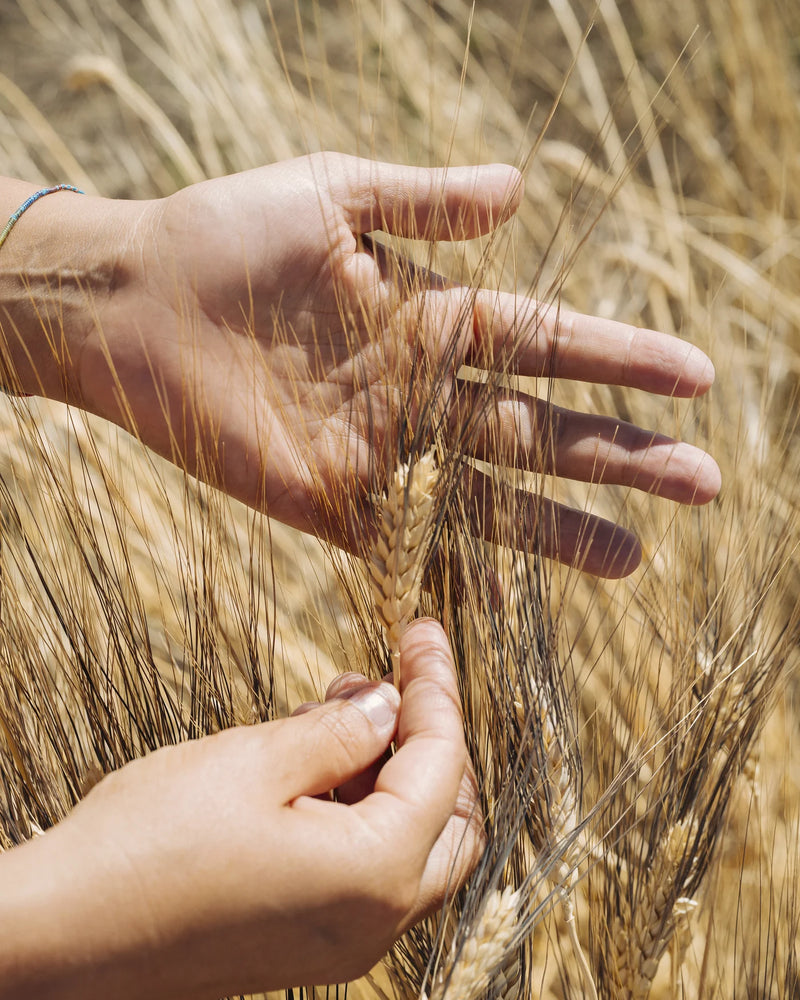
A field of ripe wheat borders a dirt track leading to a stone farmhouse with a cypress; olive trees and farmed hills all around.

Where

Where it is practised in Tuscany

The geographies of the craft are spread out. Lucca has traditions of pane lucchese (low in salt, like Tuscan bread) and of buccellato — a sweet of very ancient tradition made from leavened dough with aniseed and raisins. The Garfagnana has potato bread and spelt specialities. Prato is famous for biscotti di Prato or cantuccini — dry almond biscuits that are among the best-known sweets of Tuscany. Siena has panforte, panpepato, ricciarelli and cavallucci: a galaxy of sweets of medieval tradition, each with its own codified recipe. Pistoia has brigidini — thin aniseed-scented wafers, traditionally made at village fairs. The Maremma has buccellato grossetano and traditions of pane cafone. Firenze has the sweet schiacciata fiorentina (for Carnival) and many specialities of historic pastry making. Pane toscano DOP — saltless, from soft wheat grown in the region — is the baking benchmark of the whole territory.

On the floured table: two rolling pins, a fluted cutter, a ridged pasta comb, a scoop of flour, a scraper, an eggshell and a covered bowl.

How

The techniques of the craft

The techniques of the craft require patience and precision. Pasta madre (natural leaven derived from the spontaneous fermentation of flour and water) is the basis of traditional bread making: it gives bread a complex taste, long keeping, and an unmistakable crust structure. Long risings — even beyond 24 hours — develop aroma and digestibility. The wood-fired oven gives bread a unique crust, with a lightly smoky scent that the electric oven does not reproduce. Fresh pasta — pici from Siena, pappardelle, tortelli, ravioli — is made with eggs and flour (or with flour and water alone for the poor pasta of the countryside) and is worked by hand or with a rolling machine. Artisan dried pasta uses bronze dies that give the surface a rough porosity, able to hold the sauce. The traditional sweets (panforte, ricciarelli, cantuccini) have codified recipes and precise production standards.

In a flour-dusted workshop a man rolls out pasta on the long table; trays of tagliatelle nests in front, the wood-fired oven lit behind.

Now

The craft today

Doing it today means standing between the daily bakery and the premium product. Artisan fresh bread has a local market — village bakers, neighbourhood bakeries — but competes with large-scale retail selling industrial bread at half the price. Artisan fresh pasta lives on direct sales at the workshop, on supplying fine restaurants, and on qualified e-commerce. The Tuscan DOP/IGP sweets (Cantuccini di Prato IGP, Panforte di Siena IGP) are exported all over the world and have a global market. The challenge is the quality of the raw materials (recovered ancient grains, stone-ground flours, short-chain ingredients) and differentiation from the industrial product.

The producers of this craft