Podere Macolo

Extra Virgin Olive OilPistoiaSerravalle Pistoiese

Podere Macolo

The two owners of Podere Macolo under the stone arches, beside the bottle counter

The name comes from a stream. La Forra di Macolo rises inside the estate, and gave the estate its name long before Monica and Gaetano arrived. They brought back to life a piece of land that has been on the Catasto Leopoldino since 1800, and they made oil on it.

Montalbano hills, Serravalle Pistoiese · Moraiolo, Leccino, Frantoio · milled within 24 hours of harvest

2017The year the business was founded
3The cultivars in the blend
24hFrom harvest to milling
5The bottle sizes

A farm that was already there, and two people who took it in hand again

Good oil is not made with a recipe. It is made with a tight calendar and the discipline to keep to it.

Podere Macolo is a farm in Serravalle Pistoiese, on the Montalbano hills. It was founded in 2017 out of the restoration of an old farmstead and produces extra virgin olive oil from a blend of Moraiolo, Leccino and Frantoio. Since 2025 it has also had a shop in Pistoia, in Via Monfalcone.

The Podere Macolo olive grove on the Montalbano hills
The olive grove on the Montalbano. Fifteen hectares, and the variety is chosen even before the olive mill.

The name is that of a stream

Macolo is not a surname and it is not a marketing invention. It is the name of the watercourse that rises on the farm: the Forra di Macolo. The business took its name from the place, not the other way round.

It is a small detail that says something precise about how it was conceived: the land first, the label afterwards.

A farm on the Catasto Leopoldino

The land already appears mapped in the Catasto Leopoldino, the nineteenth-century land register of Tuscan property. Monica and Gaetano restored it with an idea they sum up themselves in a single line.

Put like that it could sound like a polite phrase. It becomes verifiable when you look at the method: hand harvesting, no synthetic products, and a processing time that almost no industrial supply chain can afford.

Signed watercolour of the tree behind the Macolo mark
The watercolour of the tree the brand comes from, signed by the Pistoia artist who drew it.

Twenty-four hours, and it is not an affectation

The olive begins to warm up and to ferment as soon as it is picked. From that moment the quality of the oil falls, and it falls fast. Podere Macolo states that it keeps the olives at low temperature and mills them cold within twenty-four hours of harvesting.

It is the choice that costs the most — it forces them to harvest a little at a time and to take the fruit straight to the olive mill — and it is the one that decides almost everything else. The oil is then decanted, filtered and kept in an oxygen-free environment, which is the second enemy after time.

A shop in town, since April 2025

Until recently Podere Macolo was a farm and nothing more. In April 2025 it opened a shop in Pistoia, at Via Monfalcone 23, where the oil stands alongside other agricultural products from the territory.

For a fifteen-hectare business it is an important step: it means no longer depending only on those who make it all the way up to the farm.

The work on paper of the tree with the collection prints, on a wooden table
The work on paper with the prints from the collection. The image of the business comes from here before it comes from the label.

Three olives, one oil

A blend is a choice about what to put in the mouth first and what to leave until last.

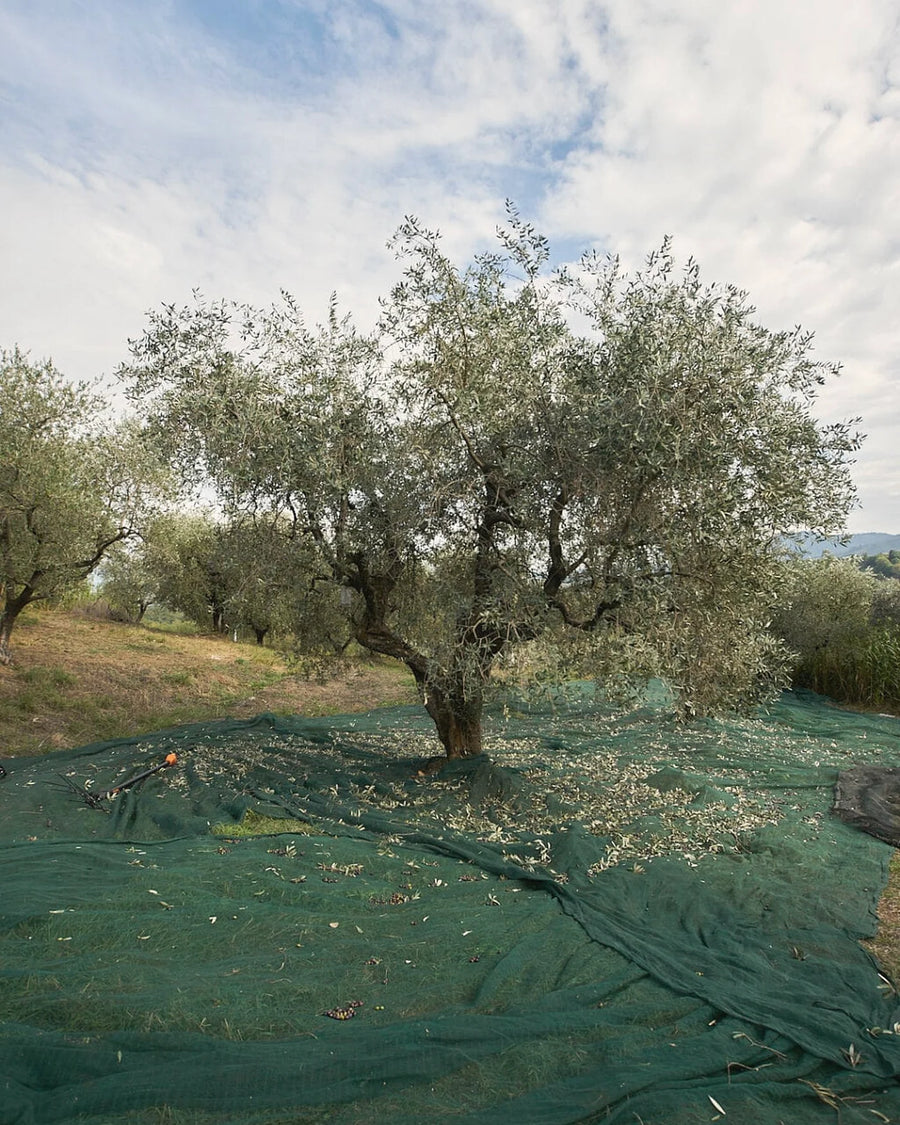
An olive tree with the nets spread out for harvesting
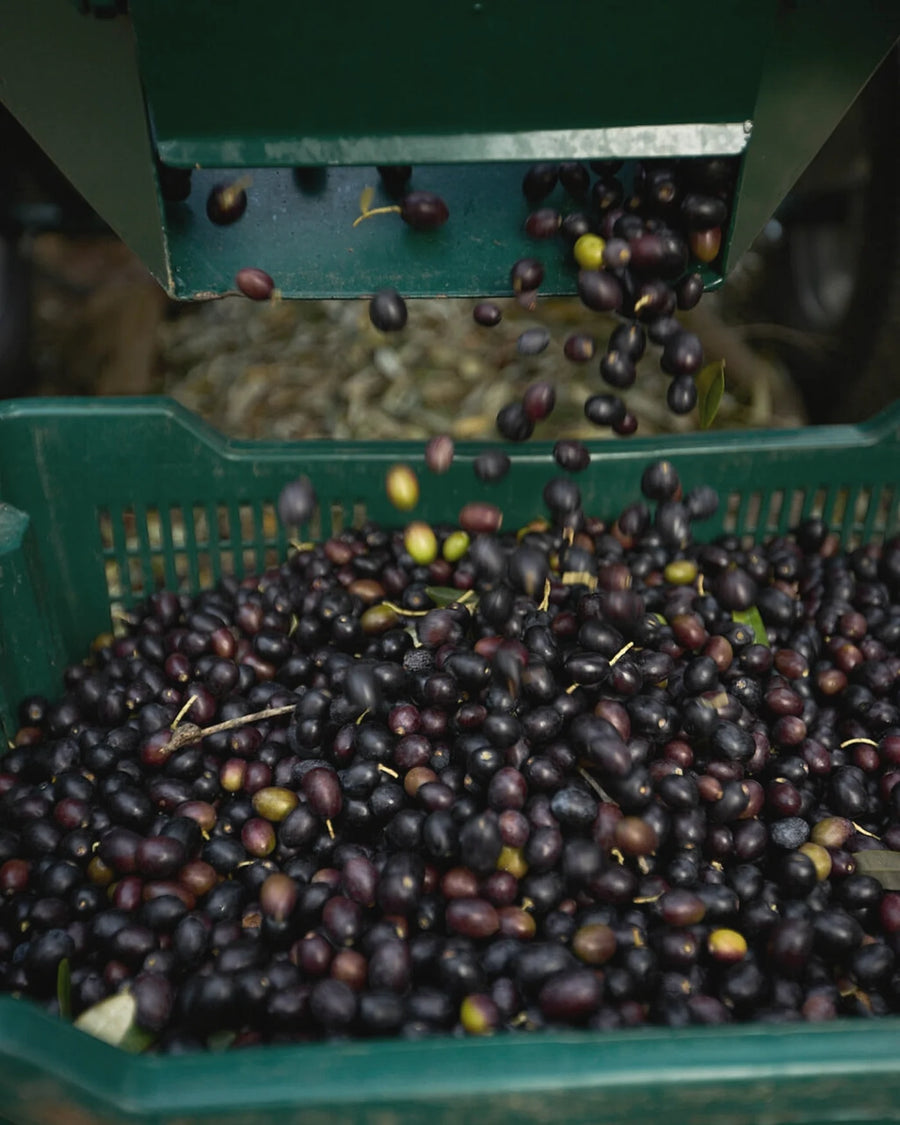
Freshly picked olives inside the perforated crates
Close-up of a bottle neck sealed with red sealing wax
The sealing-wax seal, poured by hand bottle by bottle. It is the last step, and no machine does it.
Square bottle of Macolo extra virgin olive oil beside its black case
The square bottle with its case. The tree on the brand is the one from the watercolour, not a symbol bought off the shelf.
Tuscan cultivar

Moraiolo

The small dark olive of the Tuscan Apennines. It is the one that carries the bitterness and the pungency — that is, the polyphenols, which are the part of the oil that does you good and the part that keeps it alive longest.

Tuscan cultivar

Leccino

The counterweight. It gives a sweet, round oil with little aggressiveness, and it serves to soften a blend that with Moraiolo alone would stay severe.

Tuscan cultivar

Frantoio

The cultivar that gives the olive mill itself its name. It carries the aroma: grass, artichoke, green leaf. It is the part of the oil you notice with the nose before the tongue.

How it tastes

On the nose: freshly cut grass and fresh olives. In the mouth an aftertaste of artichoke and tomato leaf remains. Bitterness and pungency, in an extra virgin, are the signature of the polyphenols. When they are missing altogether it means the oil is old, or that the olives were too ripe.

Bitterness Light
absent · medium · intense
Pungency Slight
absent · medium · intense

The video

The olive's year

Six steps, and five out of six are races against time.

An olive tree with the nets spread out for harvesting
The nets spread out under the olive tree. Harvesting is by hand and not indiscriminate: the olives come off the tree, not off the ground.
01

They grow

Traditional cultivation with natural products only, on around fifteen hectares among the olive trees of the Montalbano.

02

They harvest by hand

No indiscriminate mechanical harvesting: the olives are picked off by hand and selected. It is slow, and it is the reason why they can then mill straight away.

03

They keep them cold

From the field to the olive mill the olives stay at low temperature. Heat is what starts fermentation, and fermentation is what ruins the oil.

04

They mill within 24 hours

Cold pressing within a day of harvesting. It is the number that separates a quality extra virgin from an extra virgin and nothing more.

05

They decant and filter

The oil rests and is filtered. Filtered oil lasts longer: the residues that settle at the bottom of an unfiltered oil are the ones that make it turn rancid over time.

06

They seal it without oxygen

Storage in an oxygen-free environment, bottling by hand and bottles sealed with sealing wax and the company's logo.

What comes off the farm

One oil, five sizes, and a series of things that grow up around the olive once the oil is already in the bottle.

The complete Podere Macolo range on a green background
The range: five sizes and the flavoured oils. The dark glass keeps the oil alive.

The extra virgin

The company's product, a blend of Moraiolo, Leccino and Frantoio. In a bottle sealed with sealing wax, filled by hand.

The flavoured oils

Condiments based on extra virgin olive oil.

From the olive

What is made with the fruit instead of the juice.

Around the oil

The most curious part of the stall, and the one that is better explained in person.

Who tasted it first

Three awards in three years, and not one of the three was bought.

2026

Oleum Nostrum — second place

Twenty-second edition of the competition run by the Pistoia-Prato Chamber of Commerce. Podere Macolo's oil came second at provincial level.

2025

Grandi Oli Slow

«Evo Macolo di Podere Macolo — Serravalle Pistoiese» appears in the Slow Food Guida agli Extravergini (guide to extra virgin olive oils), 2025 edition.

2024

JOOP Design Award, Tokyo

«Il Macolo» is among the winners of the Japan Olive Oil Prize 2024. An award that looks at the bottle as well as at the contents.

Who is behind it

Two names on the sign, and three crafts called in from outside when they are needed.

Monica and Gaetano

The founders. The website presents them like this, with their first names and no formal roles: they are the ones who restored the farm in 2017 and who keep it going.

Alberto Masi Branchetti

The Pistoia artist who designed the logo and the image of Macolo, and whom the business also credits for the artistic project of the new premises.

Roberto Mastrodicasa

Olive oil sommelier. The local press lists him among the professionals who work alongside the business.

Stefano Spinelli

Olive miller. He is the figure who governs the most delicate step: milling within twenty-four hours.

The road, so far

February 2026

Oleum Nostrum, second place

Twenty-second edition of the competition run by the Pistoia-Prato Chamber of Commerce.

April 2025

The shop in Pistoia

It opens at Via Monfalcone 23, in the Vergine district: oil and agricultural products from the territory. In the same month the business takes part in Serravalle De Gusto.

2025

Slow Food's Guida agli Extravergini

«Evo Macolo» enters the Grandi Oli Slow of the 2025 edition.

2024

Tokyo

«Il Macolo» among the winners of the JOOP Design Award. In the same two years the awards from the Pistoia-Prato Chamber of Commerce also arrive.

November 2017

Podere Macolo is founded

The farm business is set up on 30 October and starts trading on 1 November, on the restored farmstead among the Montalbano hills.

1800

The farm on the Catasto Leopoldino

The land appears surveyed on the land map of the Grand Duchy of Tuscany, long before it had this name on the sign.

Where to find it

The farm is up on the hills. The shop is in town. They are two different things and it is worth telling them apart.

The farm

Via I Maggio 30/A 51030 Serravalle Pistoiese (PT) Montalbano hills, near Vinacciano.

The shop

Via Monfalcone 23 51100 Pistoia Opened in April 2025, with the oil and other agricultural products from the territory.

Contact details

Address
Via I Maggio 30/A
51030 Serravalle Pistoiese (PT)

Questions

Where does the name Macolo come from?

From a stream. The Forra di Macolo rises inside the farm: the business took its name from the place.

Which olives are inside it?

Moraiolo, Leccino and Frantoio, three Tuscan cultivars. The Moraiolo brings bitterness and pungency, the Leccino softens, the Frantoio gives the aroma.

Why do the twenty-four hours matter?

Because the picked olive starts fermenting straight away, and from there the quality of the oil falls. Milling within a day, cold, is the most expensive choice in the chain and the one that weighs most on the result.

What does it taste like?

The business describes it as slightly bitter and mildly pungent, with an aroma of freshly cut grass and fresh olives, and an aftertaste of artichoke and tomato leaf.

Aren't bitterness and pungency defects?

No, it is the opposite. They are the signature of the polyphenols, that is, of the part of the oil that is good for your health and that preserves it. An extra virgin with neither of the two sensations is usually old.

What sizes does it come in?

Five: 100, 200, 250, 500 and 750 millilitres. The bottles are filled by hand and sealed with sealing wax.

Can it be bought online?

No. The oil is bought at the Pistoia shop in Via Monfalcone 23, or by writing to the business through its own website.

How long has the business been going?

Since November 2017, although the farmstead is much older: it already appears in the nineteenth-century Catasto Leopoldino.

The oil is picked up at the farm or in Via Monfalcone

Sales stay with the business: the Pistoia shop, the website, direct contact.

The business

Registered name
Azienda Podere Macolo · Società Agricola Semplice
VAT number
01923700478
Address
Via I Maggio 30/A · 51030 Serravalle Pistoiese (PT)
Shop
Via Monfalcone 23 · 51100 Pistoia
Trading since
1 November 2017
Craft
Olive growing · and extra virgin olive oil production
Cultivars
Moraiolo · Leccino · Frantoio
Territory
Montalbano hills · around 15 hectares of olive grove

This profile is part of the archive for Extra Virgin Olive Oil. All the producers in the network.